
Purkay Labs News
Read by Topic: Airflow Management | Beyond the White Space | Containment | Delta-T | Diagnose | Efficiency | Monitoring | Operations | Overcooling | Preventative Maintenance | Resiliency | Troubleshoot Hot Spots | Uniformity Metric
Purkay Labs Launches New Website to Help Data Center Operators Diagnose Cooling Issues Faster
Purkay Labs introduces a redesigned website built for speed and clarity, featuring a 2-minute cooling quiz, a structured learning hub, and a direct path to expert guidance—so operators can move from questions to answers, fast.
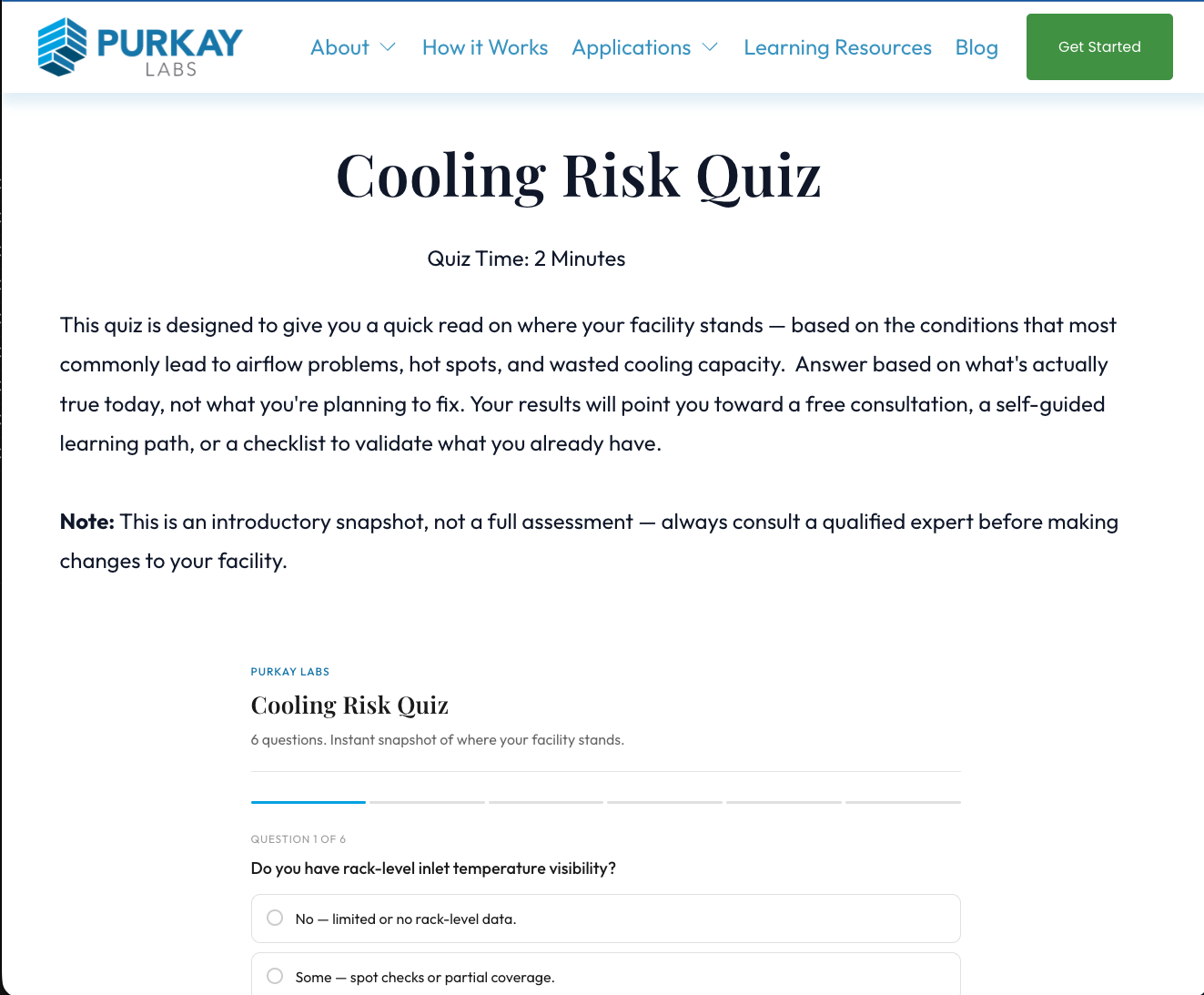
Keep It Cool — Practical insights on data center airflow and cooling performance.
Your cooling system might look fine on paper. The Cooling Risk Quiz tells you what the numbers aren't.

Why BMS Data isn’t Enough
BMS data tells you what the system is doing. It doesn’t tell you how air is actually behaving. Most cooling issues—bypass, recirculation, uneven airflow—happen at the rack level, where BMS visibility is limited or nonexistent. Spot checks fill that gap. They show what sensors miss and confirm whether your cooling is working in practice, not just on paper.
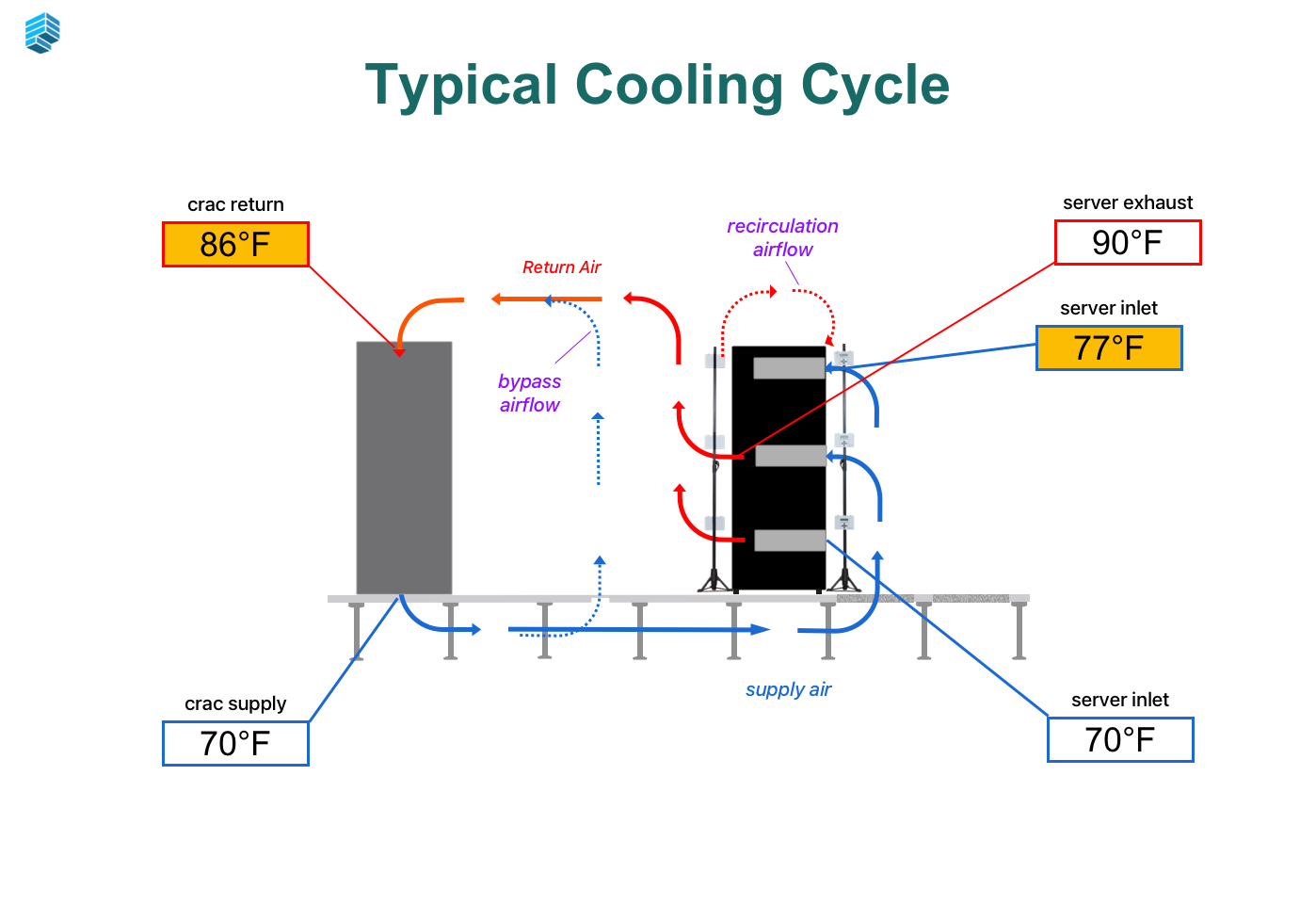
What “Good” Airflow Management Actually Looks Like
Good airflow management is not about perfection. It’s about good control. In a well-functioning data center, cold air consistently reaches server inlets, hot air returns without mixing, and temperatures behave predictably across the room. This article explains what “good” actually looks like on the floor—and how to tell if your environment is working the way it should.
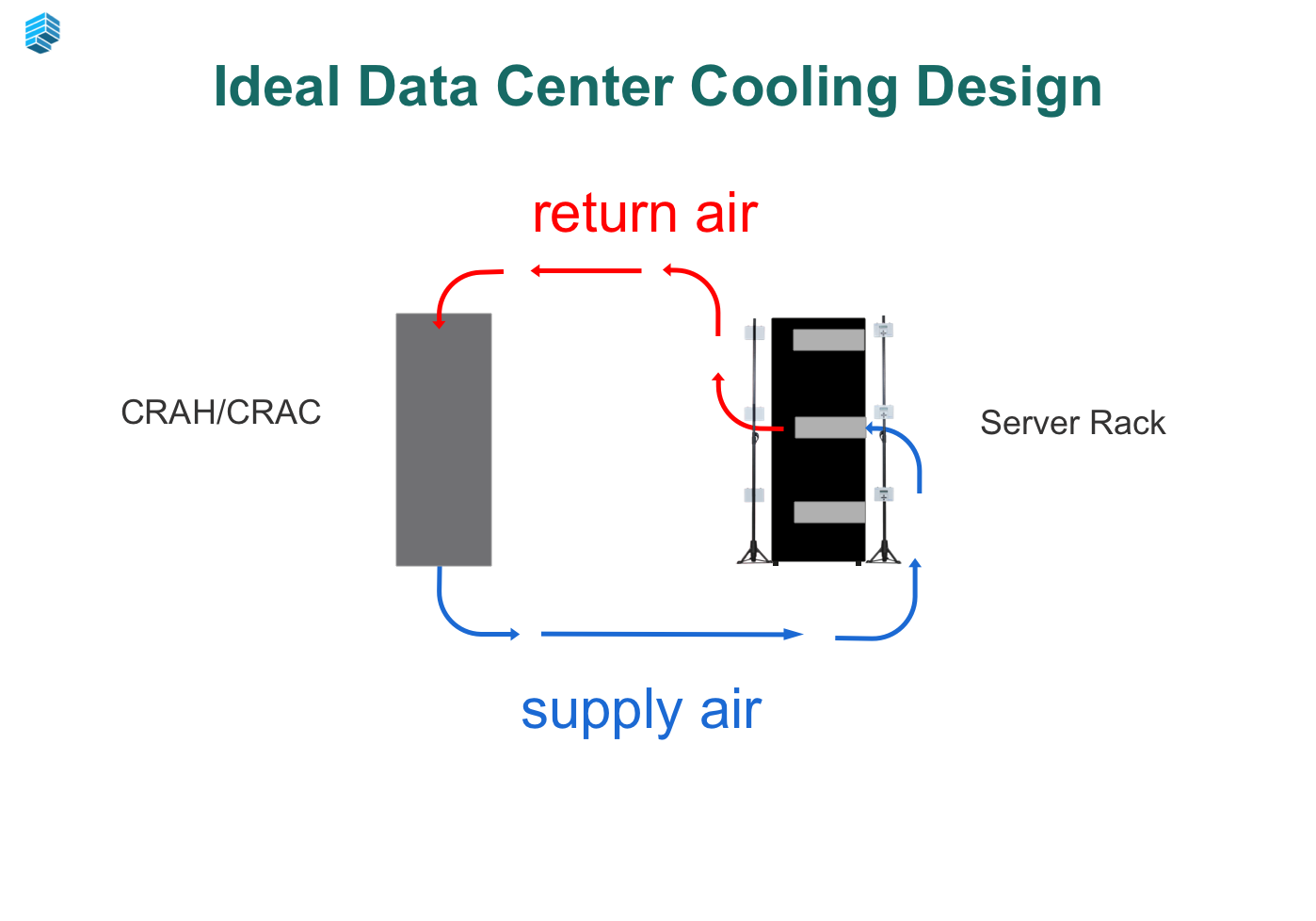
Airflow Fundamentals 101: How Data Cooling Actually Works
This guide is designed to help you understand how air actually moves through your facility. It focuses on the fundamentals—how cold air reaches servers, how hot air returns, and where that process breaks down in real environments. By the end, you should be able to spot common airflow issues like bypass and recirculation and understand why they matter before they show up as temperature problems.
Preventative Maintenance Checklist
This simple checklist is designed for operators whose airflow management and cooling performance in your facility appear to be working well. Even so, cooling conditions can change over time as equipment, layouts, and densities evolve.
Use this checklist as part of routine preventative maintenance to keep cooling performance consistent.
Airflow Validation Checklists
The purpose of this assessment is to help you assess whether cooling air is reaching your servers in a consistent and predictable way. Seemingly small issues, such as missing blanking panels, gaps in containment, or uneven temperatures across racks, can disrupt airflow long before alarms are triggered or performance is impacted.

Diagnosis Airflow Issues Checklist
Cooling problems in data centers often develop gradually and remain hidden until they trigger alarms or hot racks. This quick thermal risk self-assessment helps operators evaluate key indicators such as rack integrity, airflow behavior, temperature visibility, and cooling headroom. By answering a few simple questions, teams can quickly determine whether their cooling environment appears stable—or if hidden airflow constraints may be limiting performance.

Cooling Validation 101
Temperature sensors and BMS dashboards provide useful data, but they rarely show how cooling is actually performing across an entire data hall. This guide explains how operators verify cooling performance in live facilities using rack-level measurements, thermal surveys, airflow visualization, and resiliency testing. By understanding Delta-T patterns and airflow behavior, teams can uncover hidden hot spots, airflow imbalances, and cooling constraints before they impact uptime.
10 Warning Signs Your Data Center Has Hidden Cooling Problems
Cooling problems in data centers rarely start with alarms. They usually appear first as small warning signs—uneven rack temperatures, rising fan speeds, unexplained hot spots, or cooling units working harder than expected. This guide outlines ten common indicators that airflow or cooling performance may be limited, helping operators recognize hidden thermal issues before they impact uptime.

Airflow Management 101 Guide
Data center cooling is often described as “keeping the room cold,” but the real goal is much simpler: move heat away from servers efficiently. This guide explains how airflow actually works inside a data center, how Delta-T reveals cooling performance, and why airflow distribution often matters more than cooling capacity. Understanding the path from supply air to server inlet, exhaust, and return gives operators the foundation needed to diagnose cooling problems before they impact uptime.

2025 Year in Review at Purkay Labs
In 2025, Purkay Labs focused on making environmental data more practical and actionable for data center operators. From deeper Delta-T analysis to expanded monitoring beyond the white space, this year reinforced the importance of measuring the right spaces with the right data.

Cooling Strategies We’re Thankful For
This Thanksgiving, Purkay Labs gives thanks for the data center systems and people that keep things cool, efficient, and running 24/7.

Shape the Future of Keep Your Cool—Your Voice Matters
I’m running a short, anonymous survey to better understand who’s tuning in and what topics you want more of (or haven’t seen yet). Whether you're deep in the trenches of data center operations or just curious about airflow optimization, your input will directly shape the next wave of content.

Finding the Hot Spot: How Dynamic Heat Maps Helped Solve UPS Battery Failures
A bank’s UPS room faced random battery failures. Using Purkay Labs’ Dynamic Heat Maps, operators discovered hidden hotspots and fixed the problem for good.

Data Center Horror Stories: 5 Cooling Myths That Refuse to Die
This Halloween, Purkay Labs busts five cooling and airflow myths that still haunt data centers — and shows how to keep your facility truly chill.

Using AUDIT-BUDDY in the Battery Room: What Happens When the Power Goes Out?
Learn how AUDIT-BUDDY helps data centers test battery room performance during outages. Discover optimal temps, airflow risks, and monitoring strategies.

AIR COOLING IS DEAD! OR IS IT?
Air vs. liquid cooling isn’t an either/or. Most data centers still rely on air cooling, but shifting GPU loads make airflow management critical. Learn how Purkay Labs helps operators optimize cooling efficiency and prepare for the future.

Seeing the Whole Picture: Why Thermal Surveys Matter in Data Centers
Hot spots, airflow bottlenecks, and delta-T checks are useful—but they only tell part of the story. Learn how a full thermal survey gives operators the data they need to improve efficiency, reliability, and resilience.

Case Study: When New Isn’t Efficient: Fixing Airflow Leaks in a Fresh Data Center
A brand-new facility with recurring efficiency problems. Assessment identified airflow leaks introduced during construction. Fixed before reaching full operational load.